Good Herbalists Know Latin
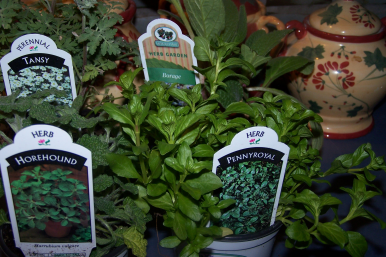
Sunday, June 01, 2008 This is my third season as an herb gardener and every year brings new lessons. The first year I just planted whatever I could find that I knew was an herb, which pretty much means anything and everything. I focused more on the medicinal varieties as opposed to the culinary ones. I didn't bother looking at the Latin names too much because they were hard to remember and ever harder to pronounce. But I've learned that in order to market a plant to the "common" gardener plant names often get a little fluffy and you may think you have a lovely variety of thyme plants when in reality you have three of the same darn thing now crowding up your garden. So, let me impart a few things to you that I've discovered over the past few years.
Lesson #1 English Sage is Common Sage
I thought I had two different types of sage here but instead I have realized they are the same plant. There is no variety at all. They are simply Salvia officinalis... common, English sage.
 Lesson #2 Same Plant Two Names
Have you heard of Bergamot, the lovely citrus scented plant used to flavor earl grey tea? How about Bee Balm, that pretty spiky flower bees adore? Well they are exactly the same thing. If it says Monarda didyma it's Bergamot... or Bee Balm... or whatever. Same thing different name.
Lesson #3 Just Because it's Yarrow Doesn't Mean it's Medicinal
Did you know the only Yarrow that has any real medicinal qualities is your run of the mill, wild white Yarrow? Have you ever tried finding it at your local nursery? If you have then you have probably run into the same problem I have. All I find is varieties like "Coronation Gold" and "Paprika". They're pretty but that's all their really good for. Check your tags and make sure it just says Achillea millefolium with no variety whatsoever. You may have to do what I did and order it from an herbal company online like Richter's. I even finally managed to find some Mugwort there too. No variety. Just Artemesia vulgaris.
 So, the main moral of the story here folks is to check you tags and know your Latin before you spend money on something you don't want and don't need. It's hard to find the real deal anymore... the real original, un-manufactured, un-hybridized product the way Mama intended it. Personally I find more beauty in the less tampered with plants out there. You know, the ones that haven't been bred with other plants or grafted or whatever. But it's all about aesthetics I guess. If that's not a metaphor for society at large I don't know what is.
Honestly, gardening of any kind brings us closer to nature and closer to the Goddess. It's fun, educational, rewarding, etc. I have learned more during three seasons with dirt under my nails that I did with a decade of herb books. It's almost as though getting closer to the plants by caring for them leads to insights into how they can be used. They each have their own personality and it's wonderful to simply sit with them and enjoy their scents, colors, and company.
When I get my camera all set again I plan on posting some pictures of my garden for those who care to see it. I've also made some great plant stakes and signs that say things like "Goddess Bless This Garden". I just love them and I've been giving them away as gifts to friends. I hope to be able to share some images soon.
Labels: gardening, Herbal, herbalism, herbs, Latin plant names

del.icio.us
| Digg it
| Yahoo MyWeb
| Google
| StumbleUpon
| Technorati |
backlinks
Email this post »  |
| leave comment
|
| leave comment
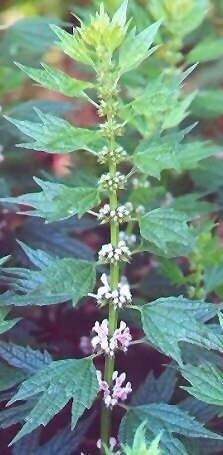 I tested out the Motherwort infusion I made the other day. Below are the results I recorded in my herbal.
  I have a plan. I've decided it's time to have another child after 8 years. I'm feeling like it's now or never basically. So, instead of heading to the doctor for fertility drugs/treatment I'm going to start with herbs.